10 October 2026
Why Energy Transformation Now Requires Digital
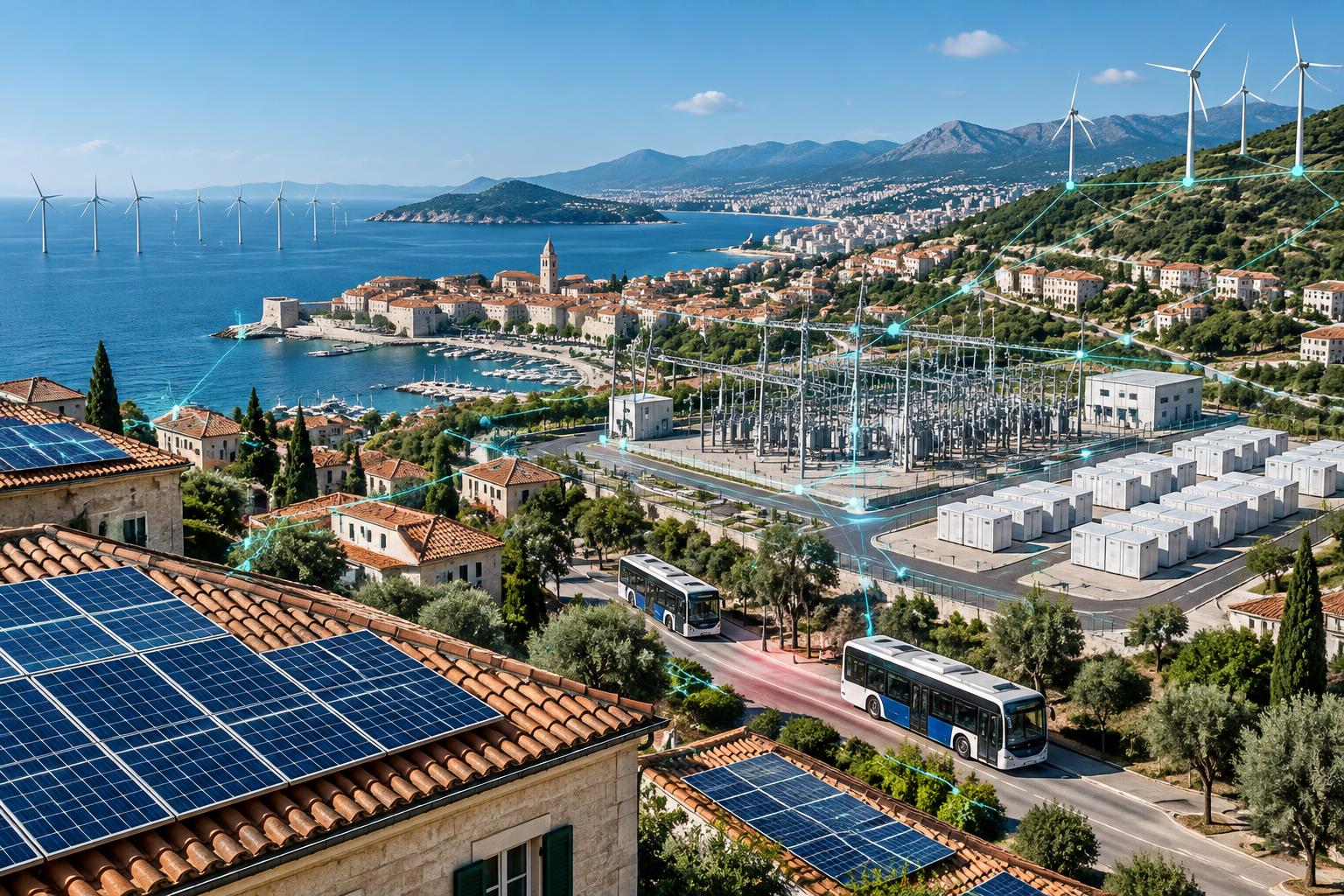
The transition has swapped a few predictable power plants for millions of restless energy assets. Keeping them in balance, second by second, requires a software layer alongside engineering judgement.
The core thesis
The old energy system was centralised, relatively predictable and largely one-directional: a handful of large thermal plants, with power flowing to passive consumers. Its operating model depended on planning generation and matching supply to demand.
The transformed system is different—distributed, variable and increasingly bidirectional. Rooftop solar, batteries, electric vehicles and flexible industrial demand change not only where energy comes from, but when and how it moves.
That shift breaks many assumptions the old operating model rested on. Analogue tools alone cannot coordinate a system defined by variability and decentralisation.
Digital is therefore not an add-on to the energy transition. It is what makes the transition operable. Decarbonisation turns energy from a supply problem into a coordination problem—and coordination at this scale and speed requires software. The megawatts are engineered; the value is orchestrated digitally.
Five pressure points where digital becomes unavoidable
1. Intermittency forces real-time intelligence
Dispatchable thermal plants can adjust output on command, within their operating limits. Wind and solar depend on the weather. Their output changes continuously.
Balancing a grid with a high share of renewables means forecasting, sensing and responding continuously. Data and algorithms help operators anticipate changes and coordinate storage, flexible demand and available generation. They complement—not replace—the physical infrastructure and engineering decisions that keep the grid stable.
2. Decentralisation multiplies what must be coordinated
The system moves from a relatively small number of large assets to millions of endpoints: rooftop solar, home batteries, EV chargers, heat pumps and industrial equipment.
These assets may generate, consume or store energy, depending on their capabilities. Software platforms can aggregate them into virtual power plants, coordinate demand-side response and support automated dispatch within agreed limits.
The challenge is no longer simply to build capacity. It is to make many independent assets work together.
3. Flexibility is the new capacity—and flexibility is digital
As variable generation grows, value increasingly depends on when and how energy is used.
Demand-side response, vehicle-to-grid and storage arbitrage all shift energy use across time. They depend on signals, metering, forecasting and optimisation, as well as suitable physical assets and market arrangements.
The asset is physical; much of its flexibility value is unlocked digitally.
4. New fuels need new value-chain visibility
Hydrogen, carbon capture, utilisation and storage (CCUS), and e-fuels introduce complex value chains with evolving infrastructure and markets.
Decisions about converting an asset, locating production or connecting supply and demand require scenario modelling. Costs, energy availability, transport, emissions and regulation must be considered together.
Digital models help compare alternatives before capital is committed. They do not remove uncertainty, but make assumptions and trade-offs more visible.
5. Whole-life carbon and cost need a connected asset model
The transition is judged not only on megawatts, but also on lifetime carbon and financial performance.
A digital twin—a digital representation of a physical asset connected to relevant data—can support monitoring, simulation and optimisation. Operational data helps teams understand performance, while lifecycle information supports assessment of embodied carbon, maintenance needs and long-term costs.
The practical point is straightforward: you cannot improve what you cannot measure reliably. A useful digital twin begins with trustworthy data and a clear operational purpose, not a visualisation alone.
Where AI agents can help
AI agents can assist the digital orchestration layer by interpreting information, proposing actions and carrying out bounded tasks. Their suitability depends on data quality, operational risk and the safeguards around each application.
- Distributed energy resource orchestration: support coordination of solar, batteries, EV charging and controllable demand, within grid and customer constraints.
- Grid planning and connection studies: assist with document review and data preparation, while qualified engineers retain final engineering decisions.
- Renewable generation forecasting: help estimate wind and solar output and inform balancing and curtailment decisions.
- Energy trading support: combine weather, prices, asset availability and grid constraints to assist traders; any automated execution needs explicit limits and approval rules.
- Gas-and-power dispatch optimisation: support coordinated analysis of gas supply, power dispatch and carbon exposure.
- Predictive maintenance: identify patterns that may signal equipment degradation and help maintenance teams prioritise inspections.
- Digital twins for asset monitoring: use connected asset models to explore behaviour, detect anomalies and assess operating choices.
- Outage detection and load balancing: assist analysis of sensor data to flag possible faults and support network operations.
- Customer operations: help draft correspondence, retrieve information and handle routine enquiries, with escalation for sensitive or complex cases.
These are application areas, not a claim that every organisation should deploy autonomous agents across all of them. Start with a specific task, assess the consequences of error and prove value before expanding responsibility.
Trust and governance are the gating factors
Capability is only part of the equation. Energy decisions can affect grid reliability, asset safety, customer rights and regulatory compliance.
Agents need clear guardrails: defined permissions, reliable input data, auditable actions, escalation routes and human accountability. Safety-critical changes require appropriate engineering controls and authorisation. A model's recommendation should never be mistaken for an approved operating instruction.
The digital layer also needs cybersecurity, interoperability and ownership arrangements that make it maintainable over the life of the infrastructure.
What this means for engineering and public-sector leaders
A digital-transformation offer does not compete with energy engineering—it completes it. Physical assets still need excellent design, due diligence and delivery. Around those assets sits the strategy, architecture, data and organisational change that makes coordinated operation possible.
A practical starting point is to choose one coordination problem: renewable forecasting, flexible demand, maintenance prioritisation or asset performance. Establish the baseline, identify the data and decision owners, set the control boundaries and test a narrow intervention.
Measure the result before scaling. The goal is not to add more software. It is to make the energy system more operable, accountable and resilient.
The old grid was designed around predictable, centralised generation. The new one has to be continuously orchestrated—and orchestration at this scale and speed is a software problem. Digital is how the transition is made to work, not a feature bolted on afterwards.
Explore Andrew's consulting practice or discuss an energy and digital-transformation project.
Discuss a project with Andrew
Request a brief